How to Pray in Hinduism: A Complete Beginner's Guide
How to Pray in Hinduism: A Complete Beginner's Guide
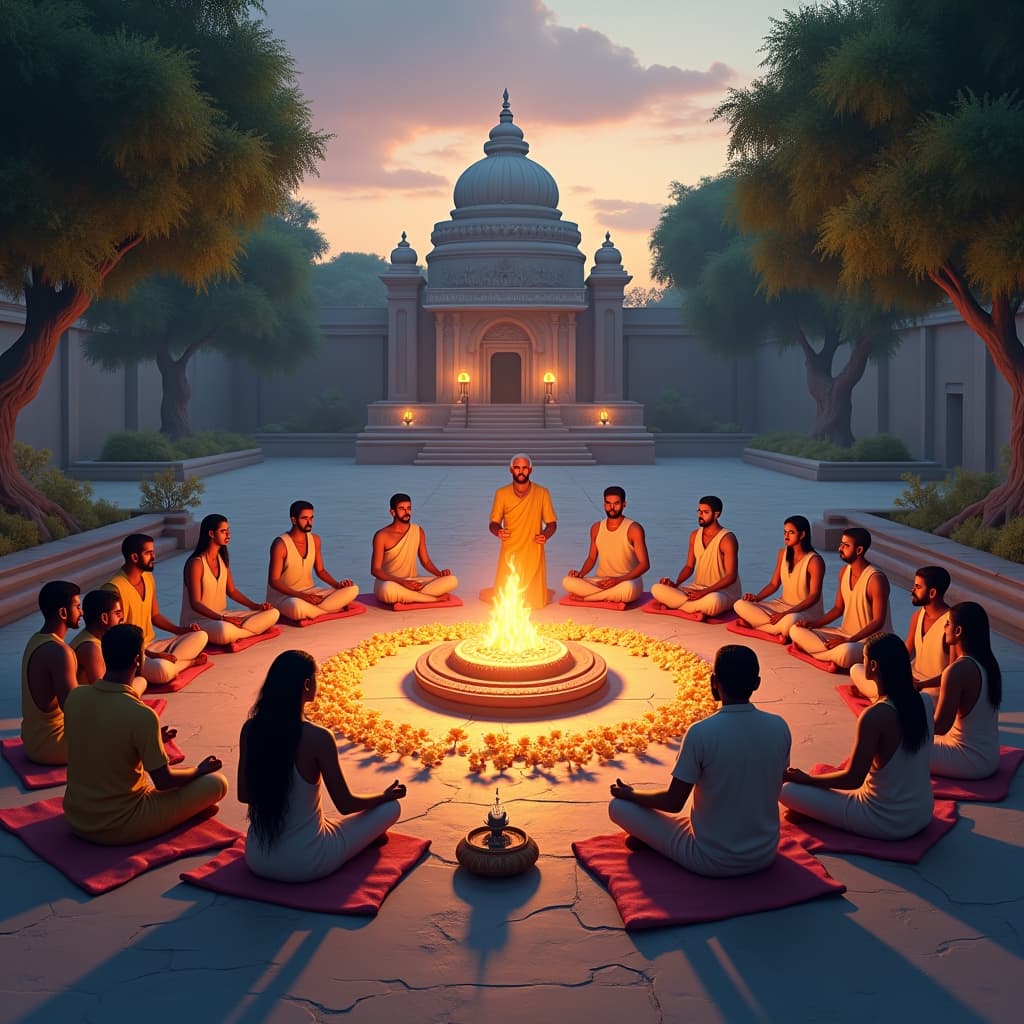
Praying in Hinduism is simpler than most people think — it begins with sincerity, a quiet moment, and an intention to connect with the divine. There is no required language, no fixed posture, no single deity you must address, and no minimum length. A Hindu prayer can be a whispered Sanskrit mantra, a folded-hand pranam before a candle, a few moments of gratitude before sleep, or a long puja with flowers and incense. This beginner's guide walks you through what Hindu prayer actually is, how to start a daily practice from zero, and the simplest mantras and rituals you can use today — without needing a temple, a guru, or any prior knowledge.
What Prayer Actually Means in Hinduism
In Hinduism, prayer is less about asking for things and more about turning your attention toward the sacred. The Sanskrit term most often translated as "prayer" is prarthana, which literally means a heartfelt request or invocation. But there are many other words for the inner gestures we group together as prayer: japa (the repetition of a mantra), stotra (a hymn of praise), dhyana (meditation), namaskar (the gesture of reverence), and bhakti (loving devotion).
The Rig Veda — among the oldest spiritual texts in human history — frames prayer as a unifying act:
"Sangacchadhvam samvadadhvam, sam vo manamsi janatam."
"Let us be united; let us speak in harmony; let our minds apprehend alike. Common be our prayer; common be our resolution; common be our purpose." — Rig Veda 10.191.2-4
Notice what is not here — there is no transactional bargain, no demand for blessings, no list of conditions. Vedic prayer begins with the recognition that the human heart is part of something far larger, and the act of prayer is the act of remembering that.
In practical terms, Hindu prayer serves three purposes:
- Connection — establishing daily contact with the divine within and around you
- Surrender — releasing the grip of ego, control, and anxiety
- Transformation — gradually reshaping the mind toward gratitude, peace, and clarity
The Different Forms of Hindu Prayer
Hindu prayer is a wide spectrum, not a single practice. Understanding the main forms helps you choose what fits your life and temperament.
Mantra Japa — Repetition of Sacred Sound
Japa means the silent or whispered repetition of a mantra, often counted on a string of 108 beads called a mala. The Bhagavad Gita places mantra at the heart of all worship:
"Among all forms of yajna (sacrifice), I am the silent repetition of mantras." — Bhagavad Gita 10.25
Even a single mantra repeated daily — Om, Om Namah Shivaya, Hare Krishna, or the Gayatri Mantra — settles the nervous system and trains attention.
Puja — Ritual Worship
Puja is the formal ritual offering, often done before a home shrine or temple murti (sacred image). It typically includes lighting a lamp, offering flowers, water, food, and incense, and reciting prayers. Puja can be elaborate or extremely simple — even lighting a single candle and offering one flower with attention is a complete puja. The depth comes from the inner state, not the props.
Bhajan and Kirtan — Devotional Song
Bhajans are devotional songs sung individually or in groups; kirtan is the responsive call-and-response chanting of divine names. These traditions, anchored in the path of bhakti yoga, use music and emotion as the gateway.
Dhyana — Meditation as Prayer
In Hindu thought, meditation and prayer overlap. Sitting in silence, watching the breath, or contemplating a sacred image are all considered forms of prayer because they orient the mind toward the divine.
Namaskar — The Gesture of Reverence
Pressing the palms together at the heart and bowing slightly — the namaskar or pranam — is the simplest and most universal Hindu prayer gesture. It can be offered to a deity, a teacher, a parent, a meal, or the rising sun.
How to Set Up a Simple Daily Prayer Practice
You do not need a complete shrine, special clothes, or formal training to begin. A real Hindu prayer practice can start tonight, with what you already have. Here is a simple beginner's framework.
1. Choose a quiet corner. It can be a corner of your bedroom, a small table, or even a windowsill. Cleanliness matters more than size.
2. Add a single sacred object. A small image of a deity you feel drawn to — Ganesha, Krishna, Shiva, Devi, or simply the Om symbol — is enough. A lamp or candle deepens the atmosphere but is optional.
3. Pick a fixed time. Most practitioners pray in the early morning (before checking your phone) and again before sleep. Even five minutes at each end of the day is transformative.
4. Use a simple sequence. Try this beginner's flow:
- Sit comfortably and take three slow breaths
- Light a candle or simply close your eyes
- Bring your hands to namaskar at the heart
- Recite a mantra or short prayer (in Sanskrit or your own language)
- Sit silently for one to three minutes
- Offer gratitude for one specific thing
- Bow slightly and end with "Om Shanti, Shanti, Shanti" ("peace, peace, peace")
This entire sequence can take five minutes. The key is consistency — daily five minutes will reshape your week far more than a one-hour ritual once a month.
5. Use a mala if you want structure. Holding a string of 108 beads and moving through one bead per mantra repetition gives the mind something to do and turns prayer into a felt practice rather than an abstract idea.
Simple Mantras and Prayers to Begin With
These are some of the most beginner-friendly mantras in the entire Hindu tradition. Pick one and stay with it for a few weeks before adding more — depth comes from repetition, not from collecting mantras.
Om (the primordial sound)
"Om iti ekaksharam Brahma."
"Om — that single syllable is Brahman, the ultimate reality." — Mandukya Upanishad
Chanting Om for even one minute is a complete practice. It is the seed of all Hindu mantras.
Gayatri Mantra (universal prayer for clarity)
"Om bhur bhuvah svaha, tat savitur varenyam, bhargo devasya dhimahi, dhiyo yo nah prachodayat."
"We meditate on the radiant glory of the divine sun; may it inspire and illuminate our minds." — Rig Veda 3.62.10
The Gayatri Mantra promotes inner peace and is traditionally recited at sunrise, midday, and sunset.
Mahamrityunjaya Mantra (for healing and protection)
"Om Tryambakam yajamahe, sugandhim pushtivardhanam, urvarukamiva bandhanan, mrityor mukshiya maamritat."
"We worship the three-eyed one (Shiva) who is fragrant and nourishes all beings; may he liberate us from death and grant us immortality." — Rig Veda 7.59.12
Shanti Mantra (universal peace prayer)
"Sarve bhavantu sukhinah, sarve santu niramayah, sarve bhadrani pashyantu, ma kashchid duhkhabhag bhavet."
"May all be happy, may all be free from illness, may all see what is auspicious, may no one suffer." — Brihadaranyaka Upanishad
This mantra makes the entire world the object of your prayer — a powerful corrective to ego-focused requests.
Bringing Hindu Prayer Into Modern Life
Hindu prayer is not designed for monks alone. The tradition has always met people where they are — householders, students, parents, soldiers, traders. The Bhagavad Gita is itself spoken to a warrior on a battlefield, not a renunciate in a forest.
Here is how to weave prayer into a modern life:
- At waking — before reaching for your phone, sit up, hands at heart, and recite Om three times
- Before meals — pause for a single breath of gratitude; the food itself becomes a prayer
- At work transitions — silently repeat your chosen mantra between tasks instead of filling the gap with notifications
- In stress — pressing hands to namaskar and breathing slowly is a complete prayer; no words required
- At night — name one thing from the day you are grateful for, and one thing you wish to release
This is the genius of Hindu prayer — it scales from a thirty-second pause to a multi-hour ceremony, and both are valid. Connecting ancient Hindu wisdom to modern life is exactly the territory where these practices come alive.
How Vedas AI Helps You Build a Prayer Practice
The Vedas AI app is designed to make starting a Hindu prayer practice as gentle as possible. You can ask the AI guide for a mantra suited to your current intention — focus, peace, healing, gratitude — and it will offer the verse, its Sanskrit, its translation, and its source text. Daily Insights deliver a single short verse each morning that you can read, reflect on, or recite as your prayer for the day. The scripture library lets you browse the Bhagavad Gita, the Upanishads, and the Vedas with AI-assisted explanations, so the meaning of every prayer is just a tap away.
Many users build a five-minute morning routine entirely inside the app: open Daily Insight, read one verse, repeat the suggested mantra three times, ask the AI for one piece of practical guidance, and close the app to start the day. There is no minimum, no judgment, and no requirement to practice in any particular way.
Frequently Asked Questions About How to Pray in Hinduism
Q: Do I need a temple or shrine to pray in Hinduism?
A: No. While a home shrine is a beautiful tradition, Hindu prayer can happen anywhere — sitting on the floor, walking, riding a train, or in silence before bed. What matters is the sincerity of your attention, not the setting.
Q: Which deity should a beginner pray to?
A: Hindu tradition offers freedom of choice. Most beginners start with their ishta-devata, the form of the divine they feel naturally drawn to — Ganesha for new beginnings, Krishna for love and guidance, Shiva for inner stillness, Devi for strength, or simply Om as the formless absolute.
Q: Do I need to pray in Sanskrit?
A: Sanskrit mantras carry their own vibrational power, but you can absolutely pray in your own language. Bhakti — devotion — is what matters. A heartfelt sentence in English is far more meaningful than a Sanskrit verse recited without attention.
Q: How long should a Hindu prayer take each day?
A: Even five minutes a day, done consistently, is more powerful than an hour once a month. Beginners often start with a single mantra in the morning and a single moment of gratitude at night. The practice grows naturally with time.
Q: Can non-Hindus pray in this tradition?
A: Yes. Hinduism does not require conversion or formal initiation to pray, chant, or meditate. The Vedas, Upanishads, and Bhagavad Gita are explicit that the divine belongs to all beings. Anyone with sincerity is welcome.
Explore Hindu prayer further with Vedas AI — your AI-powered guide to the Bhagavad Gita, Vedas, Upanishads, and the living traditions of Hindu practice. Ask questions, get personalized mantras, and connect ancient wisdom to your daily life. Download free on iOS.
Continue Reading:
Get Vedic Wisdom in Your Inbox
Join our free 5-day email course — one powerful teaching per day from the Bhagavad Gita, Vedas, and Upanishads, with a practice you can try in under 5 minutes.
Explore These Teachings
Download Vedas AI to dive deeper into Hindu wisdom with personalized guidance and daily insights.
Download Vedas AIRelated Articles

April 15, 2026
What Does Hinduism Say About Love and Relationships?
Hinduism sees love as sacred: Kama, Prema, Bhakti. Discover what the Gita and Vedas teach about love, marriage, and rela...
Read More →
May 4, 2026
What Do Dreams Mean in Hinduism? A Symbolic Guide
Discover what dreams mean in Hinduism — from the Mandukya Upanishad's dream state to auspicious signs, scriptural symbol...
Read More →
April 27, 2026
Hindu Quotes for Daily Life: 15 Timeless Teachings
Motivational Hindu quotes for daily life from the Bhagavad Gita and Vedas. Ancient wisdom on courage, purpose, and inner...
Read More →