What Is Dharma? Hindu Meaning, Types & Purpose
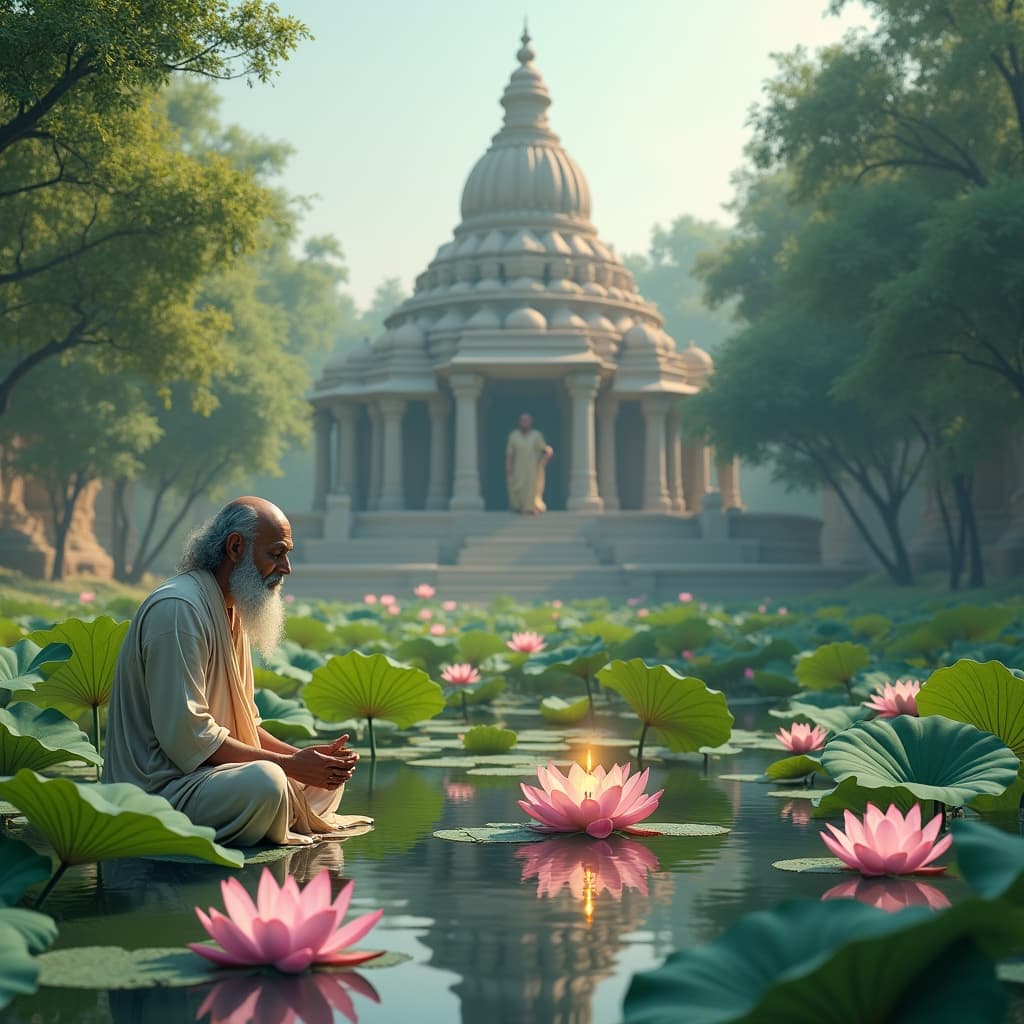
What Is Dharma? The Central Concept in Hindu Philosophy
Dharma (Sanskrit: धर्म) is one of the most important — and most difficult to translate — concepts in Hinduism. At its core, dharma refers to the cosmic order that sustains the universe, the moral duty of each individual, and the righteous way of living that leads to spiritual fulfillment. If you've ever asked "what am I supposed to do with my life?" or "how should I act in this situation?" — dharma is the Hindu framework for answering those questions. Far from a single rule or commandment, dharma is a living, multidimensional guide woven into the very fabric of existence.
The Sanskrit Root: What Dharma Actually Means
The word dharma comes from the Sanskrit root dhri (धृ), meaning "to hold," "to sustain," or "to support." Dharma, therefore, is that which holds everything together — the principles that sustain both the cosmos and human society.
This is why dharma appears in so many different contexts:
- The dharma of fire is to burn and give light
- The dharma of water is to flow downward and nourish life
- The dharma of a teacher is to illuminate truth for students
- The dharma of a parent is to protect and nurture their children
In this understanding, dharma is not an external rule imposed from outside — it is the essential nature and inherent purpose of each thing. To act in accordance with your dharma is to act in harmony with your deepest nature and with the order of the universe.
The Many Layers of Dharma in Hindu Thought
Hindu philosophy recognizes that dharma operates on several levels simultaneously.
Rita: The Cosmic Order
At the highest level, dharma is connected to rita — the cosmic order described in the Rig Veda, one of the oldest Hindu scriptures. Rita is the principle that governs the movements of stars and planets, the rhythm of the seasons, and the reliability of natural law. Dharma, in this cosmic sense, represents humanity's conscious participation in that divine order.
Sanatana Dharma: The Eternal Law
Sanatana Dharma — literally "the eternal righteous way" — is the broader name for Hinduism itself. It encompasses the eternal spiritual and moral truths not bound by time, place, or culture. These include principles like ahimsa (nonviolence), satya (truthfulness), daya (compassion), and shaucha (purity of mind and action). These principles are considered universal because they reflect the inherent order of existence, accessible to all human beings regardless of background or tradition. Hinduism and its identity as Sanatana Dharma is explored in depth elsewhere on this blog.
Varna Dharma: Duties by Calling
Historically, dharma was also expressed through varna — a division of social duties in ancient Indian society. This included the dharma of scholars and teachers (Brahmin), warriors and rulers (Kshatriya), merchants and agriculturalists (Vaishya), and those in service roles (Shudra). The original concept of varna was intended to be based on innate qualities, aptitudes, and service to society — not birth. The Bhagavad Gita returns dharma to this original, character-based spirit, teaching that one's duty in life is defined by nature and action, not by the accident of one's birth.
Ashrama Dharma: Duties by Life Stage
Dharma also changes across the four stages of a human life:
- Brahmacharya (student phase): learning, self-discipline, character formation
- Grihastha (householder): family responsibilities, earning, contributing to society
- Vanaprastha (retirement/contemplation): gradual withdrawal from worldly duties, reflection
- Sannyasa (renunciation): full dedication to spiritual liberation, releasing all attachments
Each stage carries its own unique dharmic responsibilities. What is appropriate and right at 20 may be quite different from what is dharmic at 60. The four stages of life in Hindu philosophy offers a fuller exploration of this framework.
Svadharma: Your Personal Path
Perhaps the most practically relevant concept is svadharma — one's own unique duty and calling. In the Bhagavad Gita (3.35), Lord Krishna declares:
"Shreyan swadharmo vigunah para-dharmaat swanushthitaat"
"It is far better to perform one's own dharma, even imperfectly, than to perform another's dharma perfectly." — Bhagavad Gita 3.35
This verse captures something profound: your path is yours alone. Comparing yourself to others and living their dharma — imitating their calling, their destiny, their purpose — will always feel hollow, no matter how successfully you execute it. Discovering and living your own dharma, even imperfectly, is the more authentic and spiritually fruitful path.
Dharma and Karma: How They Work Together
Dharma and karma are closely related but distinct concepts. Understanding both is essential to Hindu philosophy.
- Dharma = the righteous path, your duty — what to do
- Karma = the law of cause and effect — the consequences of how you act
When you act in alignment with your dharma — selflessly, ethically, with integrity — you create liberating karma that gradually purifies the soul. When you abandon your dharma out of fear, greed, or self-interest, you accumulate binding karma that keeps you tethered to the cycle of rebirth (samsara). Understanding how Hinduism explains the law of cause and effect illuminates why dharmic living is not just a moral nicety but a spiritual necessity.
Dharma in the Bhagavad Gita
The Bhagavad Gita — one of the most beloved texts in Hindu philosophy — is essentially a sustained meditation on dharma. The entire dialogue between Arjuna and Lord Krishna is sparked by Arjuna's crisis of duty.
Arjuna, a warrior prince, faces a devastating moral dilemma: he must fight in a righteous war against his own family and teachers. He collapses on the battlefield, overwhelmed by grief and confusion, unable to act. Lord Krishna's counsel across 18 chapters is the answer to one essential question: What is your dharma, and how do you uphold it when it is hard?
Krishna does not offer a simple command. He explains that Arjuna's svadharma as a Kshatriya (warrior) requires him to defend righteousness even when it is personally agonizing. He teaches Arjuna to act without attachment to outcomes — to do what is right because it is right, not for personal gain or to avoid personal loss.
This teaching of nishkama karma — desireless action in service of dharma — is one of the most practically powerful and spiritually profound ideas in all of human history. It answers the question not just for Arjuna, but for anyone who has ever wondered how to act rightly in a world of competing loyalties and uncertain outcomes.
Dharma in Daily Life: Practical Applications
Dharma is not abstract theology reserved for monks and scholars. It is a guide for ordinary, daily decisions:
In relationships: Your dharma as a spouse, parent, child, or friend calls you to act with loyalty, honesty, and genuine care. Fulfilling relational duties with awareness and integrity is itself a spiritual practice.
In work: The concept of karma yoga — the yoga of selfless action — teaches that your professional life becomes a spiritual path when you approach it with integrity and detachment from ego-driven results. You work your best, and you release the outcome.
In ethical dilemmas: When facing difficult choices, dharma asks: "What action upholds truth, protects the welfare of others, and honors the sacred order?" It's not always the easiest path — but it is the most meaningful and the one your soul will not regret.
In spiritual practice: Dharma guides you toward habits that cultivate clarity and compassion — meditation, prayer, honest speech, and selfless service. These practices are not separate from dharma; they are how dharma expresses itself from the inside out.
Signs You Are Living Your Dharma
When you are aligned with your dharma, Hindu wisdom suggests you may notice:
- A sense of inner rightness and integrity — even when the action is difficult
- A reduction in inner conflict, even amid outer challenges
- Actions that benefit not just yourself but others and the wider world
- A feeling of flowing with life rather than constantly resisting it
- Gradual spiritual progress — a quiet clarification and lightening of the heart
Conversely, abandoning your dharma — even for comfortable or profitable reasons — tends to produce a quiet, persistent friction that no amount of external success can fully quiet. The soul knows its path.
Frequently Asked Questions About Dharma in Hinduism
Q: Is dharma the same as religion? A: Dharma is often translated as "religion," but this translation is incomplete. Dharma refers to cosmic law, ethical duty, and the inherent righteous nature of all beings — it is broader and deeper than the institutional sense of "religion." One could say dharma is the spiritual and moral reality that all authentic religious traditions point toward.
Q: Can your dharma change over time? A: Yes. Dharma evolves as you move through different stages of life (ashramas), take on new roles and responsibilities, and grow spiritually. What is dharmic at 20 — learning, building, exploring — may differ significantly from what is dharmic at 50, when mentoring, contributing, and letting go become primary duties.
Q: What do you do when two dharmic duties conflict? A: This is one of the great questions the Bhagavad Gita directly confronts. When duties appear to conflict, one must exercise viveka (discernment) — carefully weighing the higher purpose against immediate obligation, and choosing the action most aligned with truth and the welfare of all beings. Such dilemmas are genuinely hard, and Hindu philosophy acknowledges this difficulty without pretending there are always simple answers.
Q: Is dharma only for Hindus? A: According to Hindu philosophy, dharma — especially as cosmic and ethical law — is universal. Sanatana Dharma means the eternal way, and eternal implies applicable to all conscious beings regardless of birth, culture, or tradition. Any person who lives with honesty, compassion, and genuine care for others is, in this sense, living in alignment with dharma.
Get Vedic Wisdom in Your Inbox
Join our free 5-day email course — one powerful teaching per day from the Bhagavad Gita, Vedas, and Upanishads, with a practice you can try in under 5 minutes.
Explore These Teachings
Download Vedas AI to dive deeper into Hindu wisdom with personalized guidance and daily insights.
Download Vedas AIRelated Articles
April 3, 2026
What Is Karma? Hindu Meaning, 3 Types & Examples
Karma isn't 'what goes around comes around.' Learn the real Hindu meaning, 3 types of karma, and how intention — not jus...
Read More →
April 6, 2026
Bhagavad Gita Explained: A Clear Beginner's Guide
New to the Bhagavad Gita? This guide breaks down its 700 verses, 3 yoga paths, and life-changing teachings on duty and l...
Read More →
April 24, 2026
Hindu Parenting: Family Values and Teachings from the Vedas
What does Hinduism teach about parenting and family? Learn timeless wisdom on raising children with dharma, love, and sc...
Read More →