What Does Hinduism Say About Love and Relationships?
What Does Hinduism Say About Love and Relationships?
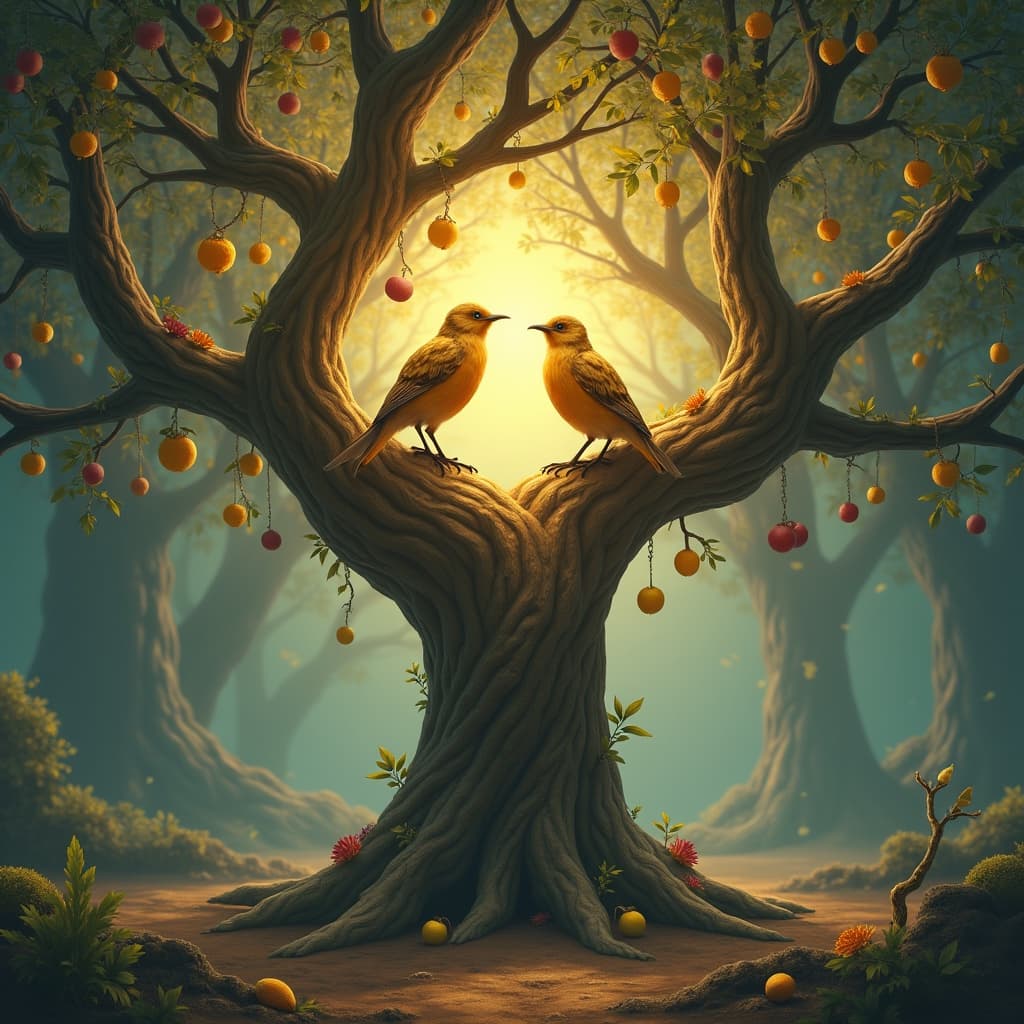
Hinduism sees love not as a single feeling but as a vast spectrum — from physical desire to cosmic devotion. Far from discouraging love, the tradition recognizes it as one of life's four highest pursuits (Purusharthas) and teaches that when relationships are rooted in dharma — righteous conduct, care, and mutual growth — they become a path to spiritual liberation itself. The Bhagavad Gita, the Vedas, and the Upanishads all address love in its many dimensions: between spouses, within families, toward the community, and ultimately toward the Divine.
The Four Forms of Love in Hindu Philosophy
One of the most nuanced contributions Hindu philosophy makes to our understanding of love is its recognition that "love" is not one thing. The tradition names at least four distinct expressions:
Kama — Desire and Longing
Kama refers to desire, including romantic and sensory love. It is one of the four Purusharthas (the four legitimate aims of life), alongside Dharma (righteousness), Artha (prosperity), and Moksha (liberation). The Hindu tradition does not treat Kama as sinful — it is a natural, even sacred force. Kama is personified as a deity, and an entire body of literature exists honoring the art of love.
However, the tradition also teaches that Kama alone is incomplete. Desire that is not tempered by dharma can lead to attachment, possessiveness, and suffering. When love is only self-seeking, it binds rather than liberates.
Sneh — Familial Affection
Sneh is the warm, protective love of a mother for her child, a sibling for a sibling, a friend for a friend. It is characterized by care without agenda, the kind of love that asks nothing in return. Hindu culture holds this form of love in especially high regard — it is the natural expression of our interconnectedness.
Prema — Pure, Unconditional Love
Prema transcends personal desire. It is love that genuinely seeks the wellbeing and spiritual growth of the beloved — not because of what they give us, but simply because of who they are. The Narada Bhakti Sutras describe Prema as the purest human love, a stepping stone toward divine devotion.
Bhakti — Devotional Love for the Divine
Bhakti is love directed toward God — and it is considered the highest and most transformative form of all. The Bhagavata Purana and the entire Bhakti tradition hold that when a human heart opens in total love toward the Divine, it mirrors the nature of the Divine itself. This love dissolves the ego, burns through karma, and leads to liberation.
These four forms are not completely separate. The Hindu understanding is that love naturally evolves: Kama, when purified, becomes Sneh; Sneh, when deepened, becomes Prema; and Prema, when directed toward the Infinite, becomes Bhakti.
Marriage as a Sacred Covenant
In Hindu tradition, marriage (Vivaha) is one of the sixteen samskaras — the sacred rites of passage that mark and sanctify the major transitions of life. Unlike a civil contract, the Vivaha ceremony is a spiritual covenant made in the presence of fire (Agni), the divine witness.
The central rite of a Hindu wedding is the Saptapadi — the seven steps taken together around the sacred fire. With each step, the couple makes a vow to the other and to the Divine:
- Together we will share our food and nourish each other
- Together we will develop our strength of mind and body
- Together we will increase our prosperity and wealth
- Together we will grow in wisdom and happiness
- Together we will raise strong and virtuous children
- Together we will live through all seasons of life
- Together we will always be the truest of friends
The final vow — friendship (maitri) — is considered the most important. Hindu scripture views the ideal spouse not primarily as a romantic partner but as the most intimate of mitras (friends), a companion on the journey of life and toward liberation.
The Rig Veda's Vivaha Sukta (the wedding hymn, 10.85) speaks beautifully of this union:
सम्राज्ञी श्वशुरे भव सम्राज्ञी श्वश्र्वाम् भव।
ननान्दरि सम्राज्ञी भव सम्राज्ञी अधि देवृषु।
— Rig Veda 10.85.46
"Be a queen to your father-in-law, be a queen to your mother-in-law, be a queen to your sisters-in-law, be a queen to your brothers-in-law."
This verse is remarkable: the Vedic tradition blesses the bride not as subordinate but as a sovereign presence in her new home. She is welcomed as samrajni — a queen, a person of dignity and power. The same hymn speaks of the couple becoming one: "May you become the ruler of this home together."
The Dharma of Family Relationships
Dharma in Hinduism extends into every relationship. Each relationship carries its own sacred duties (dharma):
-
Toward parents: The Taittiriya Upanishad instructs graduates of the gurukul: Matru Devo Bhava, Pitru Devo Bhava — "Honor your mother as divine, honor your father as divine." Parents are considered our first teachers and our first encounter with unconditional love. Caring for aging parents is a primary dharmic duty, not optional.
-
Toward spouses: The concept of Ardhanarishvara — Shiva and Shakti as two halves of one divine whole — reflects how Hinduism views marriage. Spouses are not two separate individuals pursuing their own goals but two complementary energies becoming whole. Each supports the other's dharmic unfolding.
-
Toward children: Children are understood as souls entrusted to parents for guidance and protection. The scriptures speak of Shishya (disciple) and Guru (teacher) dynamics even within families — parents as the child's first teachers of both worldly and spiritual wisdom.
-
Toward the community: The Upanishads expand the circle of love outward. The famous Vedic prayer Vasudhaiva Kutumbakam — "The whole world is one family" — is not merely a platitude. It expresses the deeply held Hindu understanding that our love cannot be restricted to our blood relations. All beings are family.
The Bhagavad Gita on Love Without Clinging
Perhaps the most powerful teaching on love in the Bhagavad Gita is about what it calls Nishkama Prema — love without the ego's need to possess or control. This is not cold detachment; it is a fuller, freer form of love.
In Chapter 12, Lord Krishna describes the devotee who is most dear to him — and what he describes is a portrait of ideal love in action:
अद्वेष्टा सर्वभूतानां मैत्रः करुण एव च।
निर्ममो निरहंकारः समदुःखसुखः क्षमी॥
— Bhagavad Gita 12.13
"One who bears ill will toward no living being, who is friendly and compassionate, free from possessiveness and ego, equal in pleasure and pain, patient — that devotee is dear to me."
This verse describes what the Bhagavad Gita teaches as the highest expression of love in human form: caring for all beings, free from the anxiety of ownership ("mine"), and unshaken by the inevitable fluctuations of relationship life.
The Gita also addresses the suffering that arises in relationships directly (2.62-63): attachment leads to desire; unfulfilled desire leads to anger; anger clouds judgment; clouded judgment destroys the person. This is not a reason to avoid love — it is a teaching about how to love better, from a place of inner fullness rather than inner lack.
Love Expressed Through Seva and Ahimsa
Two ancient values transform how Hindus approach all relationships:
Seva (Selfless Service) is the practical expression of love without ego. When you serve your spouse, your parent, your child, or your neighbor without calculating what you'll get back, you are practicing Seva. The karma yoga path in the Gita holds Seva as one of the highest spiritual disciplines — every act of genuine care is an offering to the Divine in human form.
Ahimsa (Non-harm) is perhaps the most fundamental principle in Hindu relationships. At its core, it means: do no harm — physically, emotionally, or spiritually — to any being. In relationships, Ahimsa means speaking with care, listening deeply, resolving conflict without cruelty, and always asking: does how I am treating this person honor the divine within them?
Navigating Modern Relationships with Ancient Wisdom
What does all this mean in a world of dating apps, nuclear families, and high divorce rates? The Hindu framework offers several practical anchors:
-
See the divine in your partner: The practice of Namaste — "I bow to the divine within you" — can transform how you perceive the person you love. They are not merely a person meeting your needs; they are a soul on a journey toward the same liberation you seek.
-
Grow together, not apart: The Hindu tradition frames the Grihastha ashrama (householder stage of life) as a specifically spiritual phase — not a distraction from spirituality but a primary arena for it. Raising a family, navigating hardship together, practicing patience, generosity, and forgiveness — these are not obstacles to liberation; they are the curriculum.
-
Work through conflict with equanimity: The Gita's teaching on overcoming negative emotions applies directly to relationships. Anger, jealousy, and resentment arise from ego-needs; the practice is to meet those needs consciously without projecting them onto a partner.
-
Practice Vairagya — not coldness, but non-clinging: Healthy love in the Hindu view holds its beloved lightly — appreciating them fully without grasping. "I love you" and "I do not possess you" are not opposites; they are two aspects of the same mature love.
How This Topic Appears in the Vedas AI App
The Vedas AI app frequently surfaces teachings on love and relationships through its Daily Insights and AI chat. Users can ask questions like "What does the Gita say about marriage?" or "How do I stop being jealous in my relationship?" and receive personalized, scripture-grounded guidance. The app draws from the Bhagavad Gita, Upanishads, and Vedas to connect ancient relationship wisdom to the specific challenges of modern life.
Frequently Asked Questions About Love and Relationships in Hinduism
Q: What does Hinduism say about romantic love?
A: Hinduism honors romantic love (Kama) as one of the four legitimate goals of life (Purusharthas). Far from forbidding desire, the tradition teaches that love becomes transformative when grounded in dharma — mutual respect, commitment, and care for the other's spiritual growth. The Kamasutra itself reflects this respectful view of romantic love as an art to be cultivated wisely.
Q: What is the difference between Kama, Prema, and Bhakti?
A: Kama is desire-based love, not sinful but incomplete on its own. Prema is a purer, unconditional love that seeks the good of the beloved without self-interest. Bhakti is devotional love directed toward the Divine — considered the highest and most transformative form. Most human love begins as Kama and, through practice, can deepen into Prema and eventually Bhakti.
Q: Is marriage sacred in Hinduism?
A: Yes. Marriage (Vivaha) is one of the sixteen samskaras and is a deeply spiritual covenant made in the presence of sacred fire. The seven vows (Saptapadi) bind two souls in a partnership of mutual support, dharmic duty, and shared spiritual aspiration. The Vedic tradition views the harmonious household as the foundation of all social and spiritual order.
Q: What does the Bhagavad Gita say about love?
A: The Gita's deepest teaching on love appears in chapter 12, where Krishna describes the devotee most dear to him: one who bears no ill will, is friendly and compassionate, free from possessiveness and ego. The Gita also teaches Nishkama Prema — love without clinging — which transforms ordinary attachment into spiritual offering.
Q: How should Hindus treat family members according to scripture?
A: The Taittiriya Upanishad instructs that parents should be honored as divine (Matru Devo Bhava, Pitru Devo Bhava). Spouses are viewed as complementary halves of a spiritual whole. The concept of Vasudhaiva Kutumbakam ("the whole world is one family") extends the dharma of loving care beyond blood ties to all of humanity.
Explore the Hindu teachings on love, marriage, and relationships further with the Vedas AI app — your AI-powered guide to the Bhagavad Gita, Vedas, Upanishads, and all of Hindu philosophy. Ask questions, receive personalized insights, and connect ancient wisdom to your daily life. Download free on iOS.
Continue Reading:
Get Vedic Wisdom in Your Inbox
Join our free 5-day email course — one powerful teaching per day from the Bhagavad Gita, Vedas, and Upanishads, with a practice you can try in under 5 minutes.
Explore These Teachings
Download Vedas AI to dive deeper into Hindu wisdom with personalized guidance and daily insights.
Download Vedas AIRelated Articles
April 24, 2026
Hindu Parenting: Family Values and Teachings from the Vedas
What does Hinduism teach about parenting and family? Learn timeless wisdom on raising children with dharma, love, and sc...
Read More →
April 17, 2026
How to Find Your Dharma: A Complete Guide to Life Purpose
Find your dharma — your unique life purpose — with Bhagavad Gita wisdom and practical steps. Discover the signs you're o...
Read More →
April 6, 2026
Bhagavad Gita Explained: A Clear Beginner's Guide
New to the Bhagavad Gita? This guide breaks down its 700 verses, 3 yoga paths, and life-changing teachings on duty and l...
Read More →